

If you’ve searched “Is Sunrun going out of business,” you’ve probably seen the company’s stock swing wildly, read about lawsuits, or heard that other solar installers have collapsed. It’s a fair question to ask before trusting a company with a 20-year contract on your roof.
The short answer: No. Sunrun is not going out of business. It’s still the largest residential solar and home-battery provider in the U.S., it’s publicly traded on the Nasdaq under the ticker RUN, and it posted strong revenue growth in its most recent quarterly report. But the company isn’t without real problems — a shrinking federal tax credit, a volatile stock price, and an active Texas fraud investigation are all genuinely affecting its business right now.
This article breaks down what’s actually going on: Sunrun’s financial health, why people keep asking if it’s closing, what’s happening elsewhere in the solar industry, and what it means if you’re already a customer or thinking about becoming one.
Is Sunrun Shutting Down? The Facts
Sunrun is operating normally. It continues to install solar and battery systems, file quarterly earnings with the SEC, and issue investor press releases on a regular schedule — including reports as recent as mid-2026. Founded in 2007, the company now serves more than 1.1 million customers across 22 states, Washington D.C., and Puerto Rico, and it holds a market share of roughly 13%, larger than any single competitor.
That doesn’t mean nothing is wrong. Sunrun’s stock has been extremely volatile, at one point trading more than 70% below its 2024 high before partially recovering. The volatility reflects real anxiety among investors about the solar industry’s future, not evidence that Sunrun itself is closing.
Why Do People Keep Asking If Sunrun Is Going Out of Business?
A few things are feeding the rumor:
- Rival companies really have collapsed. Sunnova, Titan Solar Power, ADT Solar, SunPower, and — most recently, in April 2026 — Freedom Forever (the industry’s second-largest installer) have all filed for bankruptcy or shut down entirely. When headlines about “solar company collapse” circulate, readers often assume the largest name, Sunrun, must be next.
- The federal solar tax credit is phasing out. The residential Investment Tax Credit (ITC) that has powered the industry for years is winding down at the end of 2025, forcing Sunrun and every competitor to restructure how they sell and finance systems.
- Sunrun’s stock has been on a rollercoaster. Wide day-to-day swings, including some sharp drops tied to federal policy news, have made investors nervous — and nervous investors generate nervous headlines.
- Sunrun is under state investigation. In April 2026, the Texas Attorney General’s office opened a fraud inquiry into Sunrun and three other solar companies.
- Older financial snapshots looked scary in isolation. Numbers like Sunrun’s multibillion-dollar long-term debt sound alarming without the context of its financing-heavy business model, which normally carries large liabilities against long-term contracted revenue.
Sunrun’s Business Model, Explained
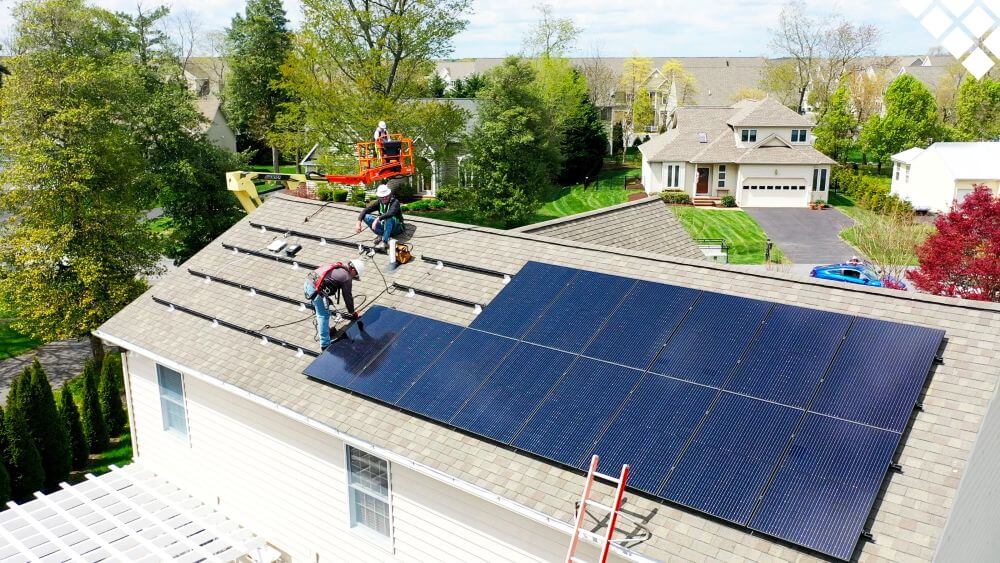
Sunrun doesn’t just sell solar panels. It runs on five main pillars:
- Installation — designing, installing, and maintaining residential solar systems.
- Leases and Power Purchase Agreements (PPAs) — letting homeowners get solar with no upfront equipment cost, paying instead for the power produced.
- Direct ownership — an option for homeowners who want to buy their system outright.
- Energy storage — home batteries that store solar power for use after dark or during outages, now a central part of Sunrun’s strategy.
- Monitoring and maintenance — ongoing system upkeep for the life of the contract.
This “third-party ownership” model — Sunrun owns the equipment, the customer pays for the energy — is why the company carries so much long-term debt on its balance sheet. It’s financing infrastructure, similar to a utility, not selling a one-time product.
How Is Sunrun Actually Performing Financially?
Sunrun’s first-quarter 2026 results tell a very different story than “going out of business”:
- Revenue of $722.2 million, up 43% year-over-year and well ahead of analyst forecasts.
- Net income of $167.6 million for the quarter.
- Record 73% storage attachment rate — meaning most new customers are adding a home battery, Sunrun’s highest-margin product.
- $92 million of debt paid down in the quarter using excess cash.
- Management reiterated full-year 2026 cash generation guidance of $250–450 million.
Cash generation was temporarily negative in Q1 because of the timing of certain project-financing deals, not because the underlying business is losing money. Sunrun says it has minimal financial exposure to the Freedom Forever bankruptcy, since it had already scaled back reliance on third-party sales partners.
None of this means Sunrun is thriving without friction — margins are under pressure as the ITC phases out, and the company is deliberately shrinking lower-margin sales channels to focus on direct sales and storage. But “restructuring under pressure” is a very different situation than “shutting down.”
Is Sunrun in Financial Trouble?
Sunrun carries significant debt, as any company using its financing model would. But debt alone doesn’t indicate collapse — it needs to be weighed against cash flow and revenue trends, which have been improving. Analysts have grown more confident in the stock through 2026 as liquidity and cash generation metrics strengthened, and price targets have climbed rather than fallen. That’s a notably different signal than what preceded the bankruptcies at Sunnova or Freedom Forever, both of which lost access to financing partners before collapsing.
Sunrun and the Texas Fraud Investigation
In April 2026, Texas Attorney General Ken Paxton issued Civil Investigative Demands to four residential solar companies — Sunrun, Freedom Forever, Lone Star Solar Services, and CAM Solar — citing more than 100 formal complaints. The inquiry centers on potential violations of the Texas Deceptive Trade Practices-Consumer Protection Act, focusing on claims about energy bill savings, system performance, and contract terms.
An investigation is not a finding of wrongdoing. Sunrun has publicly said it disputes being grouped with companies it says operate under different standards, and has pointed out that only a small number of the underlying complaints involve Sunrun directly. Still, it’s a legitimate ongoing legal matter worth watching if you’re evaluating the company as a customer or investor.
Separately, Sunrun has faced other legal actions over the years, including a securities-fraud investigation opened in 2023 after a short-seller report questioned its subscriber-count reporting, and a past class-action settlement over unsolicited marketing calls. These are real reputational and legal risks — but they are distinct from the question of whether the company is closing its doors.
What’s Happening Elsewhere in the Solar Industry
The rumors about Sunrun make more sense once you see the bigger picture. The end of the federal residential tax credit has hit weaker, less-capitalized competitors hard:
- Sunnova filed for bankruptcy amid a broader liquidity crunch.
- SunPower filed for bankruptcy in 2024; its assets were later acquired and relaunched under the SunPower name by Complete Solar.
- Titan Solar Power and ADT Solar both shut down, leaving customers with orphaned systems.
- Freedom Forever, previously the second-largest U.S. residential installer, filed Chapter 11 in April 2026 after its financing partner, Solar Mosaic, went bankrupt the year before.
Industry analysts have specifically noted that Sunrun’s more conservative approach to selling off future cash flows for present-day liquidity has left it better positioned than rivals to survive this shakeout — the opposite of an imminent shutdown.
Who Are Sunrun’s Main Competitors?
- Tesla Energy (formerly SolarCity) — Tesla acquired SolarCity in 2016 and continues to sell solar panels, solar roofs, and battery storage, often bundled with its vehicle ecosystem.
- SunPower — relaunched under new ownership (Complete Solar) after its 2024 bankruptcy, focused on high-efficiency panels for residential and commercial customers.
- Enphase Energy — best known for microinverters and home battery systems, competing more on hardware than full-service installation.
- LG Solar — a subsidiary of LG Corporation known for efficient, aesthetically-oriented panels.
- Brookfield Renewable Partners — a diversified renewable energy investor spanning solar, wind, and hydroelectric assets.
Vivint Solar, once a major rival, was acquired by Sunrun back in 2020 and no longer operates as a separate competitor.
Should You Be Worried If You’re a Sunrun Customer?
If you lease your system or have a PPA with Sunrun, the company’s ongoing operations and 20-plus-year contracts mean your service isn’t at risk from an imminent shutdown. That said, it’s worth understanding your contract terms, keeping records of your promised savings versus actual bills, and knowing how to file a complaint if something doesn’t match what you were told — particularly given the active regulatory scrutiny in Texas and other states.
Is Sunrun Stock Worth Buying?
Analyst opinion is mixed but has trended more positive through 2026 as cash flow metrics improved. Some analysts rate the stock a buy, citing improved liquidity and market-leading scale; others remain cautious given the tax-credit phase-out and litigation risk. This isn’t investment advice — talk to a licensed financial advisor and review Sunrun’s SEC filings before making any investment decision.
Final Verdict
Sunrun is not going out of business. It remains the largest player in U.S. residential solar, posted strong revenue and earnings growth in its most recent quarter, and has positioned itself more conservatively than competitors that have already collapsed. That said, it faces genuine headwinds: the end of the federal solar tax credit, stock volatility, and an active Texas fraud investigation. Those are real risks to track — just not signs of an imminent shutdown.
Frequently Asked Questions
Is Sunrun going out of business in 2026?
No. Sunrun continues normal operations, reported revenue growth of 43% year-over-year in Q1 2026, and remains the largest residential solar provider in the U.S.
What company owns Sunrun?
Sunrun is an independent, publicly traded company on the Nasdaq under the ticker symbol RUN. No other company owns it.
Did Sunrun buy out any competitors?
Yes. Sunrun acquired Vivint Solar in 2020, one of its largest competitors at the time, folding it into Sunrun’s operations.
Why did Freedom Forever go bankrupt while Sunrun didn’t?
Freedom Forever relied heavily on a financing partner, Solar Mosaic, that went bankrupt in 2025, cutting off its funding. Sunrun had already reduced its dependence on third-party financing partnerships and carries more diversified funding sources.
Is Sunrun under investigation?
Yes. In April 2026, the Texas Attorney General’s office issued Civil Investigative Demands to Sunrun and three other solar companies over alleged deceptive sales practices. The investigation is ongoing and does not itself establish wrongdoing.
What happens if I stop paying my Sunrun lease or PPA?
Missing payments on a lease or PPA can lead to late fees, contract penalties, or legal action, depending on your agreement’s terms. Persistent non-payment can also be reported to credit bureaus and affect your credit score.
Is Sunrun the largest solar company in the U.S.?
Yes. Sunrun holds roughly 13% of the U.S. residential solar market, more than any single competitor, especially after acquiring Vivint Solar.
What makes Sunrun different from other solar companies?
Sunrun’s core offering is “solar-as-a-service” — leases and PPAs that avoid upfront equipment costs — combined with a heavy focus on home battery storage, which now attaches to 73% of new installations.
Related Articles You Might Like: