

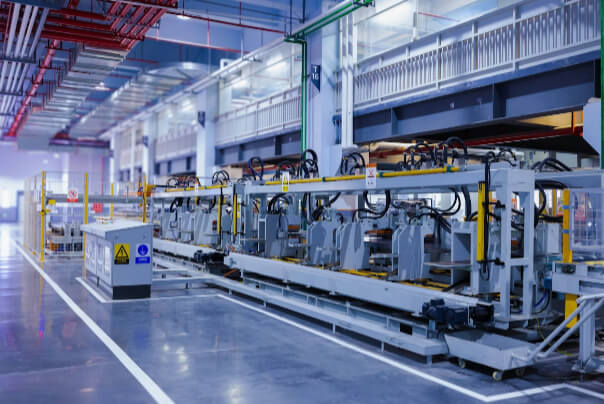
A recent survey shows that 43% of contract manufacturers have reshored or are in the process of reshoring. While that data tells us that reshoring is experiencing a surge right now, it doesn’t tell us how that process is going. For many, there are challenges on the horizon. They include operational problems for plants.
A return to Western markets isn’t just about the move. The challenges cover multiple aspects, including high labour costs, fewer experienced technicians, and the added pressure of having to deliver faster but with more SKU variety. All of these issues are signs that new and more flexible approaches are needed.
The New Reality: Reshoring Doesn’t Bring Back “Old-School” Manufacturing
It’s easy to think of reshoring as a return to something. While it might involve a return of sorts, taking something back to the origin country isn’t a time machine to the past. First of all, manufacturing has moved on, so trying to make the ways of the past match today’s standards isn’t possible.
Second, reshoring isn’t a straightforward relocation where it’s possible to keep the production model exactly the same. Instead, plants are met with a new environment that has new issues. That means manufacturers have to rethink the design of production lines.
Manufacturers are forced to do that because they’re dealing with frequently changing customer specifications. On top of that, there are shorter lead times. The demand is volatile, and plants are trying to handle unpredictable order volumes. When combined with the rising labour and energy costs, it leads to moving targets that require a different approach.
Needing to rethink is difficult, but there are solutions. Flexibility is key. That means packaging agility in small-batch production and taking advantage of Multiwire drawing lines to speed up production.
Why Flexibility is the Only Real Defence in a Volatile Market
Flexible manufacturing systems are expected to surge with a CAGR of 7.9% between 2025 and 2030. If flexibility is key, what does that actually look like? When it comes to addressing the issues of reshoring and manufacturing in general, flexibility means looking at doing things differently.
The prime example is a plant that is losing money because it’s optimised for high-volume runs. It can’t be flexible to match fluctuating demand and different specifications.
In that case, flexibility means being able to produce smaller batch sizes without penalty. However, it also comes from faster changeovers, the ability to handle multiple specs without a long setup time and less scrap and fewer mistakes during SKU switches.
High Labour Costs and Skill Shortages: The Hidden Constraint Behind Reshoring
Flexibility is useful, but it’s only part of the solution when it comes to reshoring challenges. That’s because manufacturers who are reshoring in Western countries face higher labour costs. That issue is compounded by the fact that experienced technicians are harder to find and keep.
The result is a plant with complex setups becomes risky, especially because only a few “super operators” can manage them. In these scenarios, the balance between capability and efficiency just isn’t right, which means that many reshoring project ends up failing.
Here’s where the importance of industry insights comes in. When used to look at the problem with a fresh perspective, a new solution appears: automation. In this case, it isn’t about focusing on speed. Yes, it helps that it’s fast, but actually, the agility and advantage come from fast, error-free product switching. The strategic payoff is changeover reliability, which is achievable from products like those from MFL GROUP. It’s not just about throughput.
Where Automation Pays Back First
A blanket application of automation isn’t necessarily going to help. It has to be strategic and planned. Here are some practical examples of where it can have the biggest impact on the operational burden. To address the issue of experienced technicians, it’s necessary to reduce tribal knowledge. Automation can help with guided setups via a Human-Machine Interface (HMI).
Adding products, like the BAO Series, targets key flexibility and agility issues. It reaches total automation within the rewinding and packaging process, requiring just one operator.
Another example of automation is Koch stretching plants, which are highly automated and feature integrated coil strapping with labelling and transport systems. They can also operate in line with payoff units, fully automatic double spoolers, tying systems, and roller conveyors.
Flexibility Is the Real Reshoring Advantage—But Only If It’s Automated
For reshoring to come with advantages, the challenges need to be addressed. Rethinking approaches and being more flexible are at the core of making reshoring work. The main challenges of higher labour costs and the struggle to find and keep expert technicians are what make or break the move.
A reevaluation of production systems needs to focus on flexibility. However, it won’t be able to address those challenges unless it incorporates automation. Focusing on small batches and frequent switching has to be the priority.