

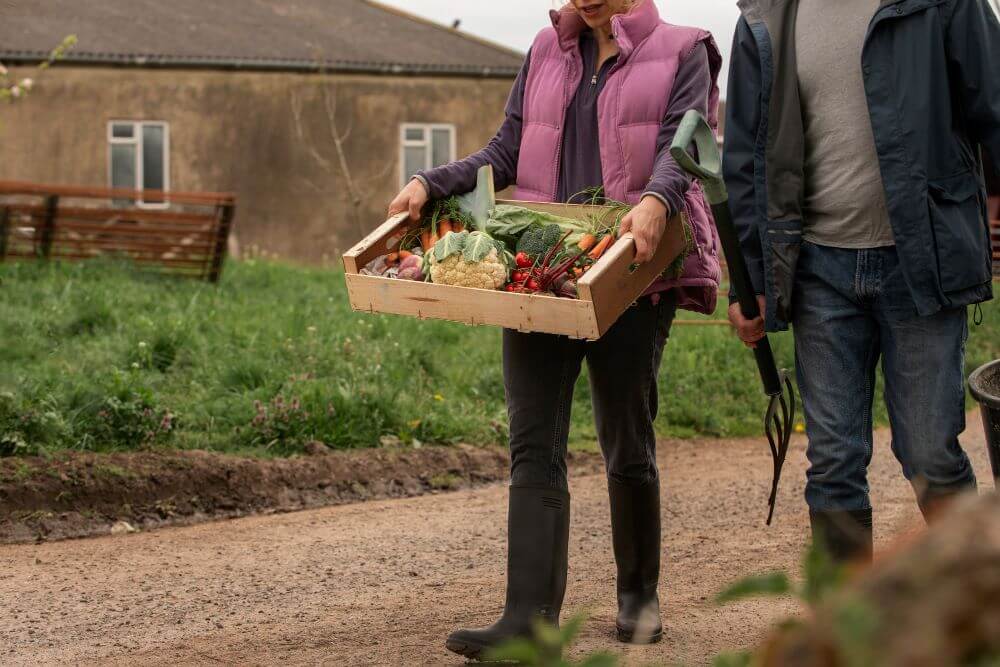
Farmers invest months of their lives planting, cultivating, and caring for crops from the safety of their fields – pest control and weather extremes monitoring – hoping to come away with successful harvests. But what many farms fail to keep logistics-oriented is the fact that all that hard work means nothing if they can’t get their product to market.
It’s harder to get product to market from farms than it is to grow it – and outsiders are clueless as to how much more complicated agriculture is.
Time Windows Are Extremely Limited
When crops are ready to go, they’re ready to go. There’s no delaying ripeness a day or two until trucks can be arranged. There’s no giving tomatoes a heads up on Tuesday that they’re going to need to be on the market by Thursday and in the meantime, since trucks aren’t available until Thursday anyway, they can sit another day or two.
As a result, pressure mounts that most other professional fields do not inherently possess. A factory can sit finished products in inventory for weeks and months until arrangements are made; a farmer has days – sometimes hours – to get those perishables out of the ground and on the road to maintain quality, integrity, and income.
Failing to meet these time frames due to the inability of transportation means letting things literally rot in the field.
Volume Surges Exceed Trucking Capabilities
Of course, growing seasons occur in cycles, meaning when one season comes into play, an overwhelming amount of product occurs all at once due to market demand. But when every farmer in a certain vicinity needs to transport a bunch of items at once, it becomes impossible to source enough trucks.
This is why it’s important for farm owners and specialty ag trucking businesses to have pre-existing relationships. Truckers realize what’s happening; they are part of the industry. They prepare. They do not wait until there’s a challenge that arises out of left field.
Freight is year-round planning – but agriculture is something else entirely when it comes to capacity.
Specialized Equipment Is Required
Corn can’t just be thrown in a trailer and hoped for the best. Hoppers for bulk commodity; refrigerated trucks for certain product; gentle touch and suspension systems for less sturdy fruits and vegetables – they all require special equipment.
Farmers who think they’re saving costs by hiring subpar services with less-than-adequate equipment find themselves learning expensive lessons about product degradation, contamination, or loss altogether. The right truck might cost more but it’s often worth it for saleable or rotten refuse.
Weather Is An Issue
Weather patterns delay schedules (delaying processing plants delays distribution which delays delivery); heat quickens spoilage during transport; freezing temperatures create hazardous conditions that prevent trucks from leaving towns.
Every blip on the radar creates a ripple effect. In other industries, it’s simply inconvenient. In agriculture, it’s degradation and loss.
Loading Needs Are Unknown
Growing crops means agricultural knowledge; loading and unloading means something different. How they load onto trucks matters; how they stack (or not) makes a difference; temperature makes or breaks quantity for saleable quality versus junk.
Farmers who use their own trucks then load incorrectly because it’s cheaper find themselves frustrated when all that hard work growing perfect tomatoes results in what happens when they’re on the road because logistical handling fails them.
There Are Multiple Touch Points
It’s not farm-to-market; it’s farm-to-processing-to-storage-to-distribution-to-retail/food service. Each transfer is important; each transfer brings challenges that need facilitation.
They need temperature control; they need documentation to go with them; they need quality control at different checkpoints. If there’s any breakdown in communications, there’s a risk at best.
Distance Increases Costs and Risks
The farther it goes, the more expensive it becomes. The higher the shipping costs, the more drivers needed; the more spoilage.
This limits which markets will benefit farmers because shipping costs cut into profit margins – and especially for lower commodity sales, every penny per pound counts.
A Million Regulations
Hours of service limitations; weight limitations; food regulations – which means safety regulations – come into play; each state has different rules about weight and length/height. Drivers have different amounts of licensing; trucks require permits. Titles with documentation require legitimacy across the board.
When farmers attempt the trucking logistics themselves, it’s often because they don’t account for compliance details. When something fails, it’s one thing – when something fails in compliance, it’s compounded by fines that equal one load’s value as well.
The Farm Takes All The Financial Risk
Transportation issues? The farm takes it. Spoilage? Revenue lost? Dirty conditions? It’s on them.
While truckers might refund fees from other industries, they don’t guarantee value lost from agricultural malfeasance. This means farms must do their due diligence when hiring or else they’re in trouble.
Seasonal Driver Finding Issues
Complications arise at harvest levels where there aren’t enough drivers in the driving industry. There’s no one who knows how to drive trucks if they only come seasonally – and specialized knowledge isn’t everywhere during peak seasons.
This means farms must fight for available positions that drive up price along with desperation to find help. Some farmers buy out miles ahead just to get them locked in or providing extra incentive just to get them available.
Technology Helps But Doesn’t Reduce The Problem
GPS mapping, temperature checks, routing technology help significantly – but only marginally for agriculture logistics.
They help systems check problems a lot faster; they help systems assess needs with technology – if technology is there – but it doesn’t automatically create the trucks needed in that moment.
Why Those Who Do It Better Thrive
Successful logistics come from those who develop it as part of their core competency instead of an afterthought. They recognize there’s as much effort needed on this side as there is on this side growing themselves. They build relationships, check excess capacity, plan for budgets instead of hoping for the best.
Ultimately, those professionals know that if they don’t get product to market successfully then their high dollars spent growing mean nothing without expertise on either side.
What Everyone Hates To Admit
Agriculture logistics will never get easier because perishability and timeliness will never shift with time – and those farms who understand this from the start will be better off than those who downplay how important logistics can be.
It’s difficult growing product – for anyone who has experience knows how much knowledge and facilitation goes into planting and growing – but moving those products from point A to point B requires a networked level of comprehension that helps those farms thrive over time when both sides meet the level of success expected.